 SOLETECH
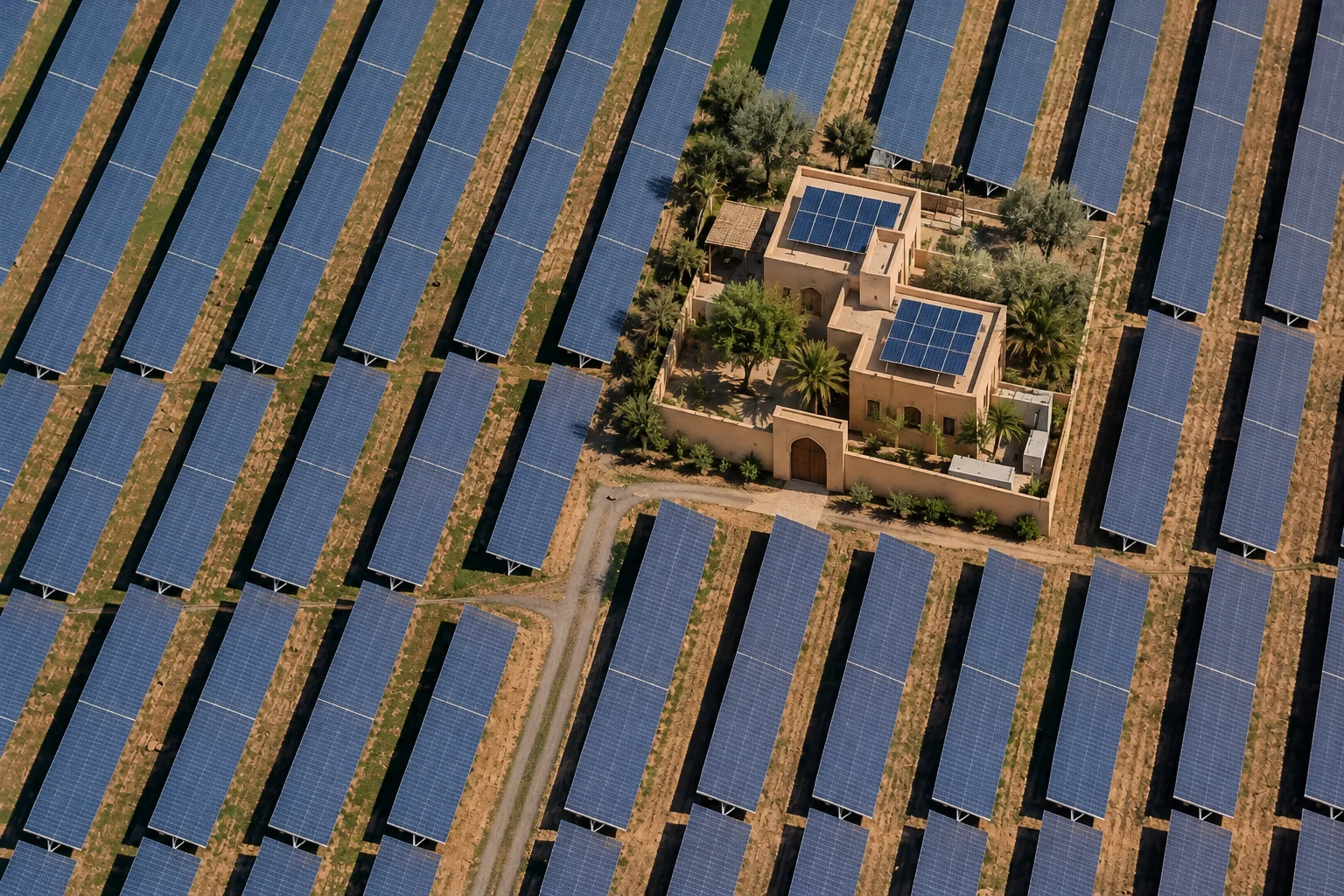
Choosing the right solar energy system is an important decision for homeowners, farmers, and businesses in Morocco. Whether your goal is to reduce dependence on the electricity grid, store solar energy for nighttime use, or provide backup power during outages, selecting suitable equipment starts with understanding your energy needs.
At SOLETECH, we supply solar inverters, lithium batteries, and energy storage systems for residential, agricultural, commercial, and industrial applications across Morocco.
This guide will help you understand the main factors to consider when choosing a solar inverter and battery storage system for your home or project.
Understand Your Electricity Consumption
Before selecting a solar inverter or battery, the first step is to determine how much electricity your property consumes.
Two measurements are particularly important:
Kilowatts (kW): The amount of electrical power required to operate equipment at a given moment.Kilowatt-hours (kWh): The amount of electrical energy consumed over time.For example, a 1 kW appliance operating for five hours consumes approximately 5 kWh of electricity.
Example: Daily Electricity Consumption in a Home
Electrical Appliance Estimated Daily Consumption Lighting 0.6 kWh Refrigerator 1.2 kWh Television and electronics 0.7 kWh Washing machine 0.8 kWh Other household appliances 1.7 kWh Total Daily Consumption 5.0 kWh These figures are illustrative estimates. Actual consumption depends on the equipment, its efficiency, and operating hours.
If your household consumes approximately 5 kWh per day, its estimated monthly consumption would be around 150 kWh.
For businesses and agricultural projects, electricity consumption should be calculated separately for machinery, irrigation pumps, refrigeration equipment, lighting, and other electrical loads.
SOLETECH Tip: Reviewing your recent electricity bills is a useful starting point when estimating the energy requirements of your property.
Select the Appropriate Solar Inverter
A solar inverter converts direct current (DC) electricity from solar panels into alternating current (AC) electricity used by household and commercial appliances.
Hybrid inverters can also manage compatible battery storage systems, depending on their specifications and configuration.
Choosing the right inverter depends on several factors:
The maximum electrical power required by your appliances.How many appliances may operate simultaneously.Whether your property uses single-phase or three-phase electricity.Whether battery storage is required.The starting power requirements of equipment such as pumps and motors.Your plans for future expansion.Examples of Deye Hybrid Inverter Ranges
Inverter Category Example Power Range Potential Applications Single-Phase Hybrid Inverters 3–6 kW Residential applications Higher-Capacity Single-Phase Hybrid Inverters 7–12 kW Homes with higher electrical loads Three-Phase Hybrid Inverters 3–8 kW Compatible three-phase installations Commercial & Industrial Hybrid Inverters Approximately 30–125 kW Larger commercial and industrial projects These ratings are examples from Deye product ranges, not fixed recommendations based on property type.
Important: A property's size alone does not determine the required inverter capacity. The selection must be based on actual electrical loads, operating conditions, and equipment compatibility.
Single-Phase or Three-Phase: Which Do You Need?
One of the most important considerations is the type of electrical installation in your property.
Single-Phase Inverters
Single-phase systems are commonly used in residential electrical installations.
They may be suitable for homes and smaller properties with compatible single-phase electrical supplies.
Three-Phase Inverters
Three-phase systems are often found in commercial facilities, workshops, agricultural installations, and properties operating three-phase equipment.
The appropriate inverter must match the property's electrical configuration and applicable connection requirements.
Before purchasing, confirm whether your electrical installation is single-phase or three-phase.
How Much Battery Storage Do You Need?
Solar batteries store energy for later use, allowing compatible systems to supply electricity when solar production is insufficient or unavailable.
Battery capacity is measured in kilowatt-hours (kWh).
The appropriate capacity depends on how much electricity you want to store and how long you need that energy to last.
Example: Calculating Backup Energy Requirements
Imagine you want to power essential appliances during a five-hour electricity outage.
If those appliances consume an average of 1 kW:
1 kW × 5 hours = 5 kWh
You would need approximately 5 kWh of delivered electrical energy.
However, battery selection must also account for:
Usable battery capacity.Depth of discharge (DoD).Inverter conversion losses.Battery operating limits.Reserve capacity.Therefore, a battery with a nominal capacity of exactly 5 kWh may not provide the full five hours of backup in this example.
Why Consider Lithium Batteries?
Lithium iron phosphate (LiFePO4) batteries are commonly used in modern solar energy storage systems.
Depending on the product, their advantages may include long cycle life, modular expansion, and integrated battery management systems.
Deye offers residential and commercial battery storage solutions designed for different power and energy requirements.
Consider Modular and All-in-One Energy Storage Systems
Some customers prefer an integrated energy storage solution rather than selecting an inverter and battery system separately.
All-in-one energy storage systems combine compatible technologies within a coordinated configuration.
Deye offers modular residential energy storage products, including stackable battery systems.
Certain configurations described in its product documentation use battery modules with capacities of approximately 16 kWh, with larger configurations available depending on the system.
Potential Benefits
Coordinated inverter and battery operation.Modular energy storage expansion where supported.Integrated monitoring and energy management features.Configurations for different residential energy requirements.Before purchasing an integrated system, verify its electrical specifications, supported configurations, installation conditions, and availability.
Choosing Solar Equipment for Farms and Businesses
Commercial and agricultural projects often have different requirements from residential installations.
A farm operating irrigation pumps, for example, may have significant motor starting loads and seasonal electricity consumption.
A business using refrigeration equipment may require continuous electricity and carefully planned backup capacity.
When evaluating equipment for these applications, consider:
Maximum simultaneous electrical demand.Daily and seasonal energy consumption.Equipment starting currents.Single-phase or three-phase requirements.Desired backup duration.Available solar generation capacity.Environmental and installation conditions.Future expansion requirements.Commercial and Industrial Energy Storage
Deye offers commercial and industrial energy storage products, including its BOS-B Pro-A3 battery system and compatible high-power hybrid inverter ranges.
These solutions are intended for applications requiring larger energy storage capacities and more detailed system planning.
Commercial and industrial installations should be assessed by qualified professionals before equipment is selected.
Make Sure Your Inverter and Battery Are Compatible
Choosing an inverter and battery independently without checking compatibility can lead to technical problems or prevent the system from operating correctly.
Before purchasing, verify the following:
Battery Voltage
Confirm that the battery voltage range is supported by the inverter.
Battery Management System (BMS)
Check whether the inverter supports the battery's required communication protocol.
Charging and Discharging Limits
Verify that charging and discharging currents are compatible with both products.
Battery Chemistry
Ensure that the inverter supports the intended battery technology.
System Configuration
Confirm that the number of battery modules and the overall configuration are permitted by the manufacturer.
Some residential Deye hybrid inverters operate with low-voltage battery systems, while certain commercial applications use high-voltage battery configurations.
These configurations are not interchangeable.
What Should You Know Before Buying a Solar Energy System?
Before requesting a quotation, gather some basic information about your property or project.
Your Solar Equipment Checklist
Location: Where is your home or project located in Morocco?Property Type: House, villa, farm, shop, office, or industrial facility?Electricity Consumption: What is your average monthly electricity usage?Electrical Supply: Single-phase or three-phase?Main Equipment: Which appliances, pumps, or machines will use electricity?Backup Power: Do you need electricity during power outages?Backup Duration: How many hours of backup would you prefer?Existing Equipment: Do you already have solar panels, an inverter, or batteries?Future Expansion: Are you planning to increase your energy requirements?Having this information available will make it easier to identify suitable equipment and request a more accurate quotation.
Find the Right Solar Equipment with SOLETECH
At SOLETECH, we focus on supplying solar inverters, lithium batteries, and energy storage equipment to customers throughout Morocco.
Our product offering is intended for homeowners, professional installers, agricultural businesses, commercial customers, and distributors.
What We Offer
Solar Inverters: Hybrid, on-grid, and off-grid equipment.Lithium Battery Storage: Residential and commercial energy storage solutions.Commercial Energy Storage: Equipment for larger business and industrial applications.Retail & Wholesale: Equipment inquiries for individual customers and professional buyers.Special Orders: Requests for specific models and equipment configurations.Delivery Across Morocco: Delivery options for customers nationwide.Request a Quote
Not sure which solar inverter or battery storage system is right for your home or business?
Contact SOLETECH with your electricity consumption, project details, and equipment requirements to request a quotation.
Office: +212 669-007998
Sales: +212 610-303807
Email:
SOLETECH — Solar Inverters & Energy Storage Solutions in Morocco.
Technical Disclaimer: This guide is intended for general educational purposes. The calculations and consumption examples are illustrative. Final equipment selection, electrical compatibility, installation safety, and system sizing require an assessment of the specific project. Product specifications and availability should be verified before purchase.